Obstacles and criticisms
There are a number of barriers in the development and implementation of a reformed orthography for English:
Public resistance to spelling reform has been consistently strong, at least since the early 19th century, when spelling was codified by the influential English dictionaries of Samuel Johnson (1755) and Noah Webster (1806).
English vocabulary is mostly a melding of Germanic, French, Latin and Greek words, which have very different phonemes and approaches to spelling. Some reform proposals tend to favor one approach over the other, resulting in a large percentage of words that must change spelling to fit the new scheme.
The great number of vowel sounds in English and the small number of vowel letters make phonemic spelling difficult to achieve. This is especially true for the three vowels /uː/ (e.g.: fume, moon), /ʌ/ (e.g.: blood, sun) and /ʊ/ (e.g.: look, put) which are represented in English by only two symbols, oo and u. Spelling these phonemically cannot be done without resorting to odd letter combinations, diacritic marks, or new letters.[29]
Some inflections are pronounced differently in different words. For example, plural -s and possessive -'s are both pronounced differently in cat(')s (/s/) and dog(')s (/z/). The handling of this particular difficulty distinguishes morphemic proposals, which tend to spell such inflectional endings the same, from phonemic proposals that spell the endings according to their pronunciation.
English is the only one of the top ten major languages that lacks a worldwide regulatory body with the power to promulgate spelling changes. Such a body may need to be set-up before any worldwide co-ordinated reform can be undertaken.
The spellings of some words – such as tongue and stomach – are so unindicative of their pronunciation that changing the spelling would noticeably change the shape of the word. Likewise, the irregular spelling of very common words such as is, are, have, done and of makes it difficult to fix them without introducing a noticeable change to the appearance of English text. This would create acceptance issues.
Spelling reform may make pre-reform writings harder to understand and read in their original form, often necessitating transcription and republication. Today, few people choose to read old literature in the original spellings as most of it has been republished in modern spellings.[30]
[edit]Writing conveys meaning, not phonemes
The main criticism of many purely phonemic reform proposals is that written language is not a purely phonemic analog of the spoken word. While reformers might argue that the units of understanding are phonemes, critics argue that the basic units are instead words. Some of the most phonemic spelling reform proposals might re-spell closely related words less alike than they are spelt now, such as electric, electricity and electrician, or (with full vowel reform) photo, photograph and photography.
[edit]Cognates in other languages
English is a West Germanic language that has borrowed many words from non-Germanic languages, and the spelling of a word often reflects its origin. This sometimes gives a clue as to the meaning of the word. Even if their pronunciation has strayed from the original pronunciation, the spelling is a record of the phoneme. The same is true for words from Germanic whose current spelling still resembles its cognates in other Germanic languages. Examples include light/German Licht, knight/ German Knecht; ocean/French océan, occasion/French occasion. Critics argue that re-spelling such words could hide those links.[31]
Spelling reformers argue that, although some of these links may be hidden by a reform, others would become more noticeable. For example, Axel Wijk's 1959 proposal Regularized English proposed changing height to hight which would link it more closely to the related word high.
In some cases, English spelling of foreign words has diverged from the current spellings of those words in the original languages, such as the spelling of connoisseur that is now spelled connaisseur in French after a French-language spelling reform in the 19th century.
Language Word Original English
French ponch punch (drink)
Japanese heddohon headphone
Japanese takushi taxi
The orthographies of other languages do not pay special attention to preserving similar links to loanwords. English loanwords in other languages are commonly assimilated to the orthographical conventions of those languages and so such words have a variety of spellings that are sometimes difficult to recognise as English words. See the table for examples.
[edit]Whose accent?
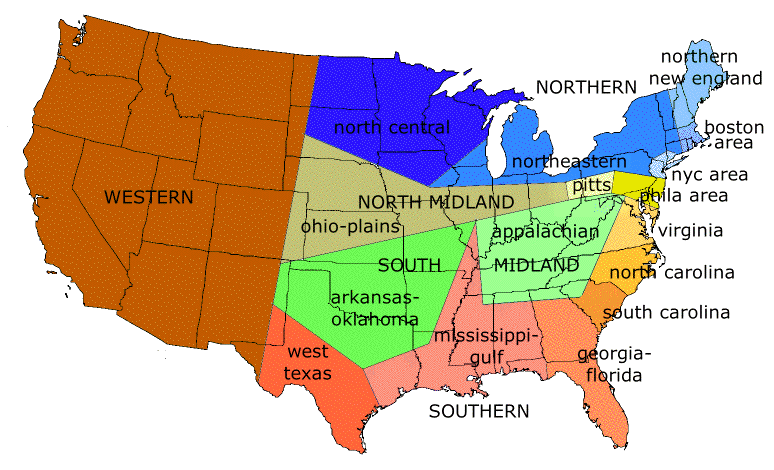
Another criticism is that a reform might favor one dialect or pronunciation over others. Some words have more than one acceptable pronunciation, regardless of dialect (e.g. economic, either). Some distinctions in regional accents are still marked in spelling. Examples include the distinguishing of fern, fir and fur that is maintained in Irish and Scottish English or the distinction between toe and tow that is maintained in a few regional dialects in England.
Reformers point-out that current English spelling sometimes favors one dialect or pronunciation over others. For example, the first syllable in simultaneously can be pronounced like the first syllable in simple (/sɪ/) or like the first syllable in cycle (/saɪ/), but current spelling favors the former. Reformers point out that a spelling reform would only affect how we spell words, not how we say them. After a reform, English would still allow multiple pronunciations of a standard spelling, as it has always done. Some reformers also suggest that a reform could actually make spelling more inclusive of regional dialects by allowing more spellings for such words.
[edit]False friends
Some reform proposals try to make too many spelling changes at once and do not allow for any transitional period where the old spellings and the new may be in use together. The problem is an overlap in words, where a particular word could be an unreformed spelling of one word or a reformed spelling of another, akin to false friends when learning a foreign language.
For example, a reform could re-spell wonder as wunder and wander as wonder. However, both cannot be done at once because this causes ambiguity. During any transitional period, is wonder the unreformed spelling of wonder or the reformed spelling of wander? This could be resolved by using the old wander with the new wunder. Other similar chains of words are device → devise → *devize, warm → worm → *wurm and rice → rise → *rize.
Reformers argue that, even if this cannot be resolved, the resulting confusion would be less than what we suffer under today's spelling system, and furthermore, would be only temporary.